Have you ever dreamed about having a full height, finished basement you and your family can enjoy?  A large open space like a basement can create a wonderful family room, recreation room or even additional living space.  The process of basement lowering, also called underpinning, can turn that old and damp basement of your into a bright and livable space for your and your family.

Finishing a walkout basement in Toronto

There are many advantages to lowering your basement, ranging from stabilizing your home from structural problems, or simply expanding your living space. Taking the plunge can really change the way you live, and protect you from structural damage that may occur. Many of the older homes in Toronto were not meant to be used as living space, but the cost of real estate and scarcity of available land in Toronto has turned the basement into a viable option. Here we explore 5 reasons why you should lower your basement:

  1. The construction process will uncover the hidden mechanics of your home and make them easily accessible for inspection, upgrades, and repairs. It will make it easy to replace your old plumbing, electrical, and insulation systems, especially if you live in an older house, and help you to modernize your home. Your waterproofing systems will also be changed when you lower your basement, so you will have a brand new dry concrete floor. Over time, you will cash in on energy savings, mechanical savings, and safety of your home.
  2. Basement lowering is a necessity when your house’s foundation suffers structural problems and cannot adequately support the house due to extreme climates, soil types, or inexperienced workers causing damage to the structural integrity of your home. It will immediately stabilize your home, strengthen the house, and give you a peace of mind, not to mention increase your home’s value and equity to future purchasers for years to come.
  3. Lowering your basement will give you up to fifty percent more below-ground space, greatly expanding the available space in your home! Once upon a time, basements were only used for mechanics and storage, but the modern basement can be turned into absolutely any function you want it to be: an extra bedroom, a home office, a home theatre system, a rental suite, a room to entertain guests in- you name it! You gain much more usability of space without having to buy a new house.
  4. By lowering your basement, you can increase ceiling height and lighting. Traditional basements have the problem of low ceilings and may feel cramped, but the added headroom will make your basement a far more attractive space in your house, and open up the conversion possibilities of your basement suite. You can remove any unnecessary walls to get rid of unneeded rooms open it up as a larger space, or add any rooms to a big open space as you wish. The possibilities are endless.
  5. Basement lowering is the least expensive and disruptive way to add more space into your existing home, and give your house a refresh. This is particularly important for growing families who need the extra space without the purchase of a new home. Basement lowering will get rid of any moisture and leakage problems, help you add floor space, and can even help you construct a new entrance/walkway for added safety and convenience.

Whether you are simply intrigued by this beneficial construction process, or are in need of services immediately to help fix your home’s structural problems, basement lowering will enhance, strengthen, expand, improve, and add value to your home.

Have questions about turning your basement into a full height, livable area?  If you live in Toronto or the surrounding GTA, you can contact us here for a free in-home estimate and inspection.

Getting ready to finish your basement?  Better check for foundation cracks before putting up that drywall!

Any home repair project involves looking into the future—you can picture the finished product, say a carpeted basement with a TV set or maybe a bedroom for your teenage son.  Looking far ahead is great, but it’s important to switch focus, looking into the distant future but also into the immediate future.  The latter is where you’ll find some things you have to do to prepare.

If you plan to finish your basement, putting in a finishing wall and some sort of flooring, you have to make sure the foundation is in good condition first.  An approach similar to turning up the radio when your car is making a noise simply will not work—don’t carpet over floor cracks that could potentially leak water or put up walls over foundation wall cracks thinking that out of sight is out of mind.  You’ll be setting yourself far back by hiding increasing damage.

We repair hundreds of basement a year here in Toronto and some of the hardest, more so for the homeowner watching their drywall get stripped away, are basements that have already been finished.

First, The Symptoms

If you have spotted cracks in your foundation—or perhaps the water that has seeped in as a result—the first thing is to shore up the damage.  You may use caulking or other home-repair methods to take care of the crack itself.  Keep in mind, though, that sealing from the inside won’t be enough—in a minute we’ll discuss structural damage of which cracks are a symptom.  You will need to dig to access the outside of your basement wall or floor and seal from the outside—this is where an experienced waterproofing company comes in..


The Disease

It’s extremely important to realize that a crack in your basement is not some isolated event or happenstance.  It is a symptom of a larger disease.  There’s no way you can have a crack in your foundation without it being a sign of a larger problem.


Settled Foundation

Cracks are often caused by your foundation settling—or sinking—into the soil.  This is also referred to as floating, which means your foundation is actually moving around slightly with the soil, which is what causes cracking.  This might require piering of your foundation—definitely a job for a contractor—or might be remedied by adding rebar or fiber to the concrete to improve its strength.  The point is that merely filling a crack and then spending the money to finish your basement instead of fixing the settling does not make sense.  You have to fix the disease, not the symptom.


Drainage Problems

Horizontal cracks are likely caused by water drained from your roof.  The water from your downspouts may be directed too close to the ground surrounding your basement.  This pushes too much water into the ground, which then freezes.  In addition to fixing the actual cracks, then, consult an expert and make sure you have your gutters and downspouts working and aligned properly to not cause further cracking.


Bowed Foundation Walls

If the walls of your basement have been subjected to so much pressure that they are actually slightly caving in, or bowed, you have a larger problem.  This situation calls for a contractor to either do some piering referred to above or to use carbon fiber strips to properly support the wall.


Give your basement a good inspection before you start

The best thing you can do is thoroughly inspect your basement before a renovation.  If you have issues such as doors not closing properly, water seepage, or sloping floors, you almost certainly have a problem that must be fixed.  It will of course be extremely hard to fix an issue once you’ve finished the basement, so do yourself a huge favor and fix it first.

Have questions about cracks in your foundation?  Before you start your basement renovations, feel free to contact us for a free in-home inspection of your foundation.


Did you know that problems on your roof can lead to a leaky basement?

The roofing system on your house, which includes the shingles, eavestroughs, and drains, are meant to do one thing; to channel rain water from your roof and away from your foundation.  If the system is working properly, that’s exactly what it will do.  If it’s not, then rain water will begin to pool around your home’s foundation, eventually causing water problems in your basement.

Here in Toronto, the roofs on our homes are subject to some severe weather conditions.  The long Winters, with snow build up, thawing, then re-freezing, can really wear down your roof over time.  It’s important to schedule times throughout the year where you can inspect your roof system and make sure that it’s properly channeling water away from your foundation.

The infographic below provides a nice pictorial of potential problems you may come across when you examine your roof.  Take a few minutes of preventative maintenance to help avoid costly foundation repairs later on.  Have questions about channeling water away from your foundation?  Feel free to contact us here, we’re happy to help!

Roof Maintenance Infographic


Spotting subsidence problemsMany people worry about the long term costs and safety of buying a house with subsidence. Subsidence refers to unstable building foundations which cause parts of the structure to slowly sink downwards. As with all building issues, levels of subsidence vary greatly, with home owners having to endure great costs and distress in more severe cases. If you are a landlord, subsidence is never a welcome sign for functional property management, so if you suspect your property has subsidence or the problem is getting worse, spotting the signs early may help you avoid larger worries down the road.

Causes

The most common causes of subsidence are due to geological, natural causes. Clay soils are a common culprit for the problem as they lock in moisture for long periods of time which then causes it to expand. Once dried, it then shrinks, making the foundations of a building unstable. These soils are usually found along river banks so the location of your property can be a crucial factor in subsidence risk. Look for signs of subsidence after a long wet or dry spell. Tree roots can also dry out this clay and create a problem to a structure as the roots grow out of control. This accounts for more than half of all subsidence cases so it is important to maintain or chop down a large tree close to your property. Uneven soils also add to the issue, especially in areas which witness earthquakes and tremors on minor and major fault lines.

Spotting subsidence problems


Spotting subsidence

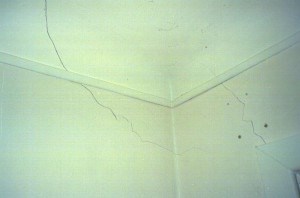
The key thing you should look for when spotting signs of subsidence are cracks. It can sometimes be hard to differentiate a subsidence crack to one which has been the simple result of time and seasonal changes such as frost. Look for interior and exterior cracks which taper diagonally downwards across wall surfaces. Another sign is to look for changes in wallpaper. Once you have ruled out damp as the cause, subsidence should be the next worry. Many cracks are hidden by wallpaper, so as the levels of your walls shift; ripples and hanging corners may appear in the paper. If these signs are spotted, also test your doors and windows in their frames to check for alterations. Unfortunately, monitoring your house for subsidence can be a lengthy process which is frustrating as the sooner the problem gets sorted, the less money and time you will have to spend on treating the problem.

How to repair subsidence problems

How to treat subsidence

Actually treating the problem of subsidence can be the most lengthy and distressful stage of the whole process if the issue goes unnoticed for some time.

The process of underpinning the entire structure may have to be implemented in the most severe cases which can cost homeowners thousands of pounds. The majority of properties with subsidence will not need to be fixed with such extreme lengths but it is always best to get your home thoroughly assessed. Although underpinning is a costly fix, the likelihood of subsidence is usually minimal, which will help towards insuring your property. Insuring a property with subsidence can be arduous although there are now many comparison websites which research the best deals for you.

Roots causing subsidence problem

In terms of tree roots, you will need the advice of an expert as to whether removing the roots from under the property will be a quick solution or a detriment to the project. Over the years, major root networks will have shifted the soil to create space. Once the roots are taken away, this space may soon fill up with water, which will add to your structural problems.

Another cause of unwanted water under your home is a burst or leaking pipe. Once this problem is determined, mending this can be a quick fix.


Ice damming on Toronto roofIs your roof leaking?  One of the places where mold loves to grow is in the attic, where a leaky roof is often the culprit.  Even if your roof isn’t causing problems now, if it’s several years old you should consider adding it to your annual inspection checklist.

The roof of your home needs timely maintenance, repair and replacement for comfortable living.  With the changing seasons, and sometime extreme weather, the roof on a Toronto home is subject to some severe conditions.  It’s important to periodically inspect the condition of your roof and take remedial measures  in time to avoid costly repairs, which usually result in neglecting to “nip the problem in the bud”. Unnoticed, small leaks from the roof can make their way into the attic and down the walls of your home. Mold growth, damaged floors, furniture and carpets are usually the result. Periodic checks should be carried out so you can spot signs of trouble before they get out of hand.

Check out this neat infographic courtesy of The Phoenix Roofing Team to help you determine if your roof needs replacing.

roofing-infographic

1.     Check the external appearance of the roof at the top joints for any cracked or torn portion or any missing plates or pieces.

2.     Have a close look at the roof for any loose sheet or gap around chimney, vents, pipes or other protrusions from the roof.

3.     Look for the presence of granules from the roof at the bottom of drain pipes. They look like large grains of sand.

4.     Inspect the drainage and confirm that gutters and drain pipes are firmly secured and passages are not blocked.

5.     Make sure that vent pipes from kitchen, bath and drier are completely outside of the home.

6.     Make sure that the roof is not sagging anywhere.

7.     Check for any signs of leakage of water.

8.     Check for any dark spots and trails.

9.     Check for any hole through roof (outside light visible from under the roof).