basement waterproofing

Safety tips during a floodEvery year a surprising number of homes in The North East of America and Canada are flooded during storms. While this is happening, there’s often little we can do about it, because the force of water can be unstoppable. As it recedes, it’s time to take quick action, as it may still be possible to recover the situation, at least in part.

Here in Toronto, we were lucky to miss the bulk of Hurricane Sandy, which ripped through much of the East coast.  While damage was minimal, there were still thousands of homes that experienced damaging floods that turned their basements into mini swimming pools.  Next time you experience a flood in your basement, be sure to take the following precautions before proceeding.

  • Make sure the electricity is turned off – This is your number one priority, because every year there are reports of people being electrocuted in their flooded homes.  The electrical panel to the home is almost always located in the basement and if water reaches it, it can have devastating effects to anyone that is wading through the water.  Make sure power to the entire house is shut off.  Have an electrician confirm this, don’t take a risk. Water can conduct electricity through your body with deadly results!


  • Check for gas leaks – Turn off the supply if you smell the slightest whiff of gas. Carbon dioxide is rightly called the silent killer, because you can’t smell it. Make sure your home is well-ventilated before you turn on any gas appliance (or even light a candle or a cigarette).


  • Inspect your sewerage system – If there’s water bubbling up, then you can be sure there’s a stoppage somewhere. Be sensible about this. Find alternatives without adding to the problem. And don’t take a chance with drinking tap water until you get the okay from the authorities (after which you should let it run for a while first).


  • Only eat food you can trust – If your freezer has been out of action beyond the recommended period, don’t touch the food stored in it. After you open the freezer door for the first time, cook anything that’s safe immediately.


  • Get help – If you’re trapped by surrounding water, try to contact the authorities for help. As soon as you can, inform your insurance company and ask for guidance. It’s also a good idea to have your home inspected for unseen damage. Book soon for this, as the queue is bound to be long. Make sure the examination includes the foundation, structure, roof, and all reticulation systems too.


  • The big clean-up – Be sure to wear stout waterproof boots, strong rubber gloves and face protection, because you never know what’s washed into your home along with the water. Be especially mindful of rodents, snakes and stray animals, and stay away from bee and wasp nests.

When things return to normal as your home dries out and your insurance company completes repairs, you may be left with one nagging problem that’s sometimes extremely different to resolve. This is the mould that could be growing silently in damp spaces beneath the floors and attic, from where it can spread almost anywhere.

At best, mould is an irritation that ruins fabrics and stains art works permanently. At worst, it can trigger chest infections, and cause asthma attacks and coughing seizures. If you end up with severe mould infestation in your home there’s little chance of eliminating it yourself – especially when you have extreme water damage as in the case of a flood. Save yourself a deal of time and trouble by calling in a mould expert instead.  Mould removal companies have special structural drying equipment and detectors that can effectively remove the moisture, and mould from your home.

Getting your home ready for rainy Fall season TorontoThe weatherman is predicting alternating spells of warmer and cooler weather in Toronto this fall. This could result in abnormal precipitation in South Ontario. This means it’s time to start thinking about keeping your Toronto basement dry. There are various things that you could do to keep your home and basement dry this Fall.

Your main contribution is going to be to ensure effective surface water run-off, so the moisture can’t seep down alongside your foundation walls where it could build up and start to penetrate through. Get this right, and even a poorly waterproofed basement might survive for a while. However there could be other problems too.

Gutters and Downpipes

A roof is a catchment area that channels rainwater into gutters and down drainpipes. If these become blocked or overloaded, they spill over, releasing uncontrolled water that could cause a flood. You need to do three things:

  • Determine whether your gutters are deep enough, and if there are sufficient downpipe points


  • Find a service to keep the system scrupulously clean and inspect it regularly for damage


  • Ensure that water discharged to ground level is channeled away to where it can’t cause harm

Garden Area

If there’s an area in your garden where the water pools, or where the plants and earth are mouldy, you can bet your bottom dollar that it’s feeding water down below ground – where it could easily find its way to the outside of your basement walls.

It’s vital that you build an open drainage system to prevent this happening. If your property is low-lying, and you’re receiving run-off from a neighbour, you may even need to consider installing a sump pump so the problem stays under control.

Leaking Appliances and Pipes

As basement is almost inevitably below a main dwelling. To check for leaky pipes upstairs, turn off all the taps and monitor the water meter for an hour. Liquid follows gravity downwards. Downwards is often into your basement. If your water meter moved, call in a leak detection expert to sort the problem out for you.

Underground Problems

The same applies in the basement itself. Make sure your appliances are watertight, and that there’s no sign of mould where pipes penetrate. If you find evidence of water seepage through the walls themselves, you need to do one of two things right away:

Dig out the basement on the outside and fix the problem properly

OR

Install a weeping tile and sump pump system to channel the water away.

These jobs both require the services of an experienced basement-waterproofing specialists.  Before starting any work, be sure to get a few estimates first and decide if this is your best course of action.

Stop-Gap Solutions

If your problem is little more than a damp smell, you may be able to keep it under control for a while by installing a commercial-grade dehumidifier, and ventilating regularly with fans. However in this instance you may be delaying the inevitable as more water finds ways though. Home insurance seldom if ever covers neglect.  Don’t neglect a damp basement either.


A water soaked carpet can be a real mess. Especially when it’s in your basement and it’s soaked from possibly contaminated sewer water.  Yuk! Every moment you delay, your carpet’s survival is under threat. At the same time, there’s little purpose in trying to do anything while the water’s still coming in. This is definitely no time to be rash. You need a cool head here.  Here in Toronto, between the weather and the age of many of our homes, basement flooding is quite common.  If you do experience a basement flood, and your have carpet down there, here are a few tips for you to follow.

flooded carpet with mold

Turn off the Water Supply – If a basement suddenly develops a leak, it’s quite possible an appliance down there has developed one too. Turn off the water at the entry point. Just don’t go below because it might not be safe to do so yet.

Switch off the Electricity – Don’t mess with this one. Your life could be at stake. Turning off the main switch is only good enough if the basement’s correctly wired. Rather ask an electrician to make your basement electrically safe for you.

Inspect the Area – Now you can take a good look around the basement, and hopefully find the root cause of the problem. Check the ceiling and the walls for obvious signs of running water. Look at every plumbed-in appliance carefully. Then examine the carpet for water-intrusion from beneath. The darkest, wettest spot is likely where your problem lies.

Salvage the Carpet

If the carpet is cheap, or clearly ruined, don’t waste your time with it. Put in an insurance claim and have a new one fitted. A carpet that isn’t cleaned and dried properly is a great candidate for mold.  However if you have a high insurance excess and consider it worth salvaging, here are two alternative solutions.

  • If the carpet is recoverable but really water-sodden (or you need to uplift it anyway to attend to an underground leak) clear the basement and use a commercial wet-vac to mop up as much water as possible. Then remove the carpet (watch out for rusty nails on edging strips) and take it someplace where it can dry out in the sun.


After that, you can find a carpet fitter to relay it for you. Don’t waste time trying to salvage the underlay though. It’s relatively cheap, and will stretch and tear as you take it up in any case.


  • If the water spill is localized and clearly not welling up from below, all you may need to do is mop it with the commercial wet-vac (don’t press down hard) and then turn on several large fans plus a powerful dehumidifier. Don’t rush things. When it’s finally dry, you can shampoo it clean.

Move Quickly

Ignore a damp carpet in a basement, and you’re inviting mold to settle down there, from where it could gradually migrate upstairs and affect your family’s bronchial health. Should you be unable to take any of the steps we recommend immediately, then it’s time to call in a commercial carpet cleaning service urgently.

Longer-Term Concerns

Clearly, there’s little point in reinstating a carpet until the root cause of the flooding has been solved. Depending on your skills you may be able to sort out a plumbing problem yourself. However, if you’re faced with water intrusion you’re going to need advice from a basement water-proofing specialist, because that’s probably a more serious concern that will require a professional inspection.


wet basements richmond hillOh dear. It’s winter, and the wet basement smells damp again! In fact, it’s getting to the point where you don’t want to go down there any more – but you have to, in order to check the furnace and clean up some of those water leaks from time to time. Here in Toronto, many of the older homes suffer from chronic wet basements and it’s not only annoying, but removes a whole level of a home that could be a perfectly good living space.

While some basement water problems are beyond a homeowners control, like rising water tables and hydrostatic water pressure on the foundation, there are several things you can do to try and keep your basement as dry as possible.

Let’s Take a Walk Outside First

Basements get wet due to rainwater intruding through the ground around them, especially when gutters and downpipes discharge large quantities in a small area. Inspect your water drainage system all the way to the discharge gullies. If the water is pooling above or near your basement, you can bet your last dollar its filtering further down too.

About the Window Wells …

Do you find water pooling under or running down nearby a basement window? Well then, you’re probably looking directly at the problem. Digging out and replacing an old window well can be quiet a mission. But you could probably make the problem disappear by attaching a plastic bubble for less than $50, excluding labor, sealant and a few screws.

Not Solved Yet? Let’s “Crack” the Problem

Water is a mighty curious thing. When it spots a crack in a basement wall from outside, it’s just has to pay a visit to see the view from within. If the cracks are less than two millimeters wide you could have a go with silicone – or hydraulic cement if the gap is bigger. Just make sure you rake out everything that’s loose, and do the job when the gap is dry and dust-free too.  This can be a tricky fix, if it looks like anything other than a hairline crack, you may want to call a basement waterproofing contractor to come and seal it properly.

On to More Serious Matters

It can happen that the integrity of your basement wall has failed in places, and that the water’s permeating directly through it. The correct solution is to expose it on the outside, and water-proof it properly so the problem goes away. If you’re between jobs (or a little cash-strapped maybe) you could apply a sealant on the inside. Rest assured though, the problem will return.

Finishing Off the Job

After you’ve stopped the water penetrating (at least for now) you need to get rid of the remaining moisture, unless you like musty smells and mould. Your sure-fired winner is a heavy duty energy-rated dehumidifier. But don’t go cheap, or you’ll soon be buying another one.

Still Not Fixed?

If your wet basement problem won’t go away (or soon returns) you need to face up to the fact that it’s beyond your scope of work and time. There are a variety of options ranging from weeping tiles to sump pumps. The work is technically advanced. It’s time to call in a basement waterproofing expert to ensure a long term fix to your water problems.


scarborough waterprrofingThe short answer is sometimes, but in many cases, no.

Nusite has been in the waterproofing business in Toronto for a long time, I can’t remember how many failed interior basement waterproofing jobs I’ve been asked to fix, and how much money has been wasted in that way (although I’m sure it’s a big number in both cases). It’s not that the work itself was bad, it was just the wrong solution to applied to the job.  The truth is that the only sure-fire way to plug a leak is at its source, and that’s the honest truth.

However there are a few methods that could help you manage the problem from the inside. I’ll tell you about them on the basis that there’s always a reason why something seems inexpensive – but often isn’t in the long run.

Things that Might Work

The correct way to waterproof a basement is from the outside. The logic is the same as putting a roof on top of a house, as opposed to trying to waterproof the ceilings from underneath. Why’s that? The pressure of the water pooling on the ceiling boards will work its way through them, and dislodge the paint from inside. We call that hydrostatic pressure in the water-proofing industry

However even a basement that’s well waterproofed from the outside will still leak if cracks develop in the walls or floor. The same can happen if a plumber drills a hole through through the wall. In that case it’s perfectly feasible to seal the gaps with a polyurethane caulk – or epoxy filler if the openings are wider than one eighth inch.

If the moisture is permeating through the fabric of the building itself, no amount of epoxy or polyurethane (or any other product in my experience) is going to do much good for any length of time. That’s because of hydrostatic pressure, once again.

True, you could install a weeping tile around the internal perimeter of the basement and pump the accumulated water away with an automated sump pump. You could even cover everything nicely with a plastic sheet or panel. But you still haven’t waterproofed your basement.

Toronto waterproofing contractor exterior dig

What Should Work

Concrete, cement and bricks are made from natural products found in the earth. And water seeps through earth in no time at all. The only way to stop it leaching through your basement walls and floors is to prevent it from getting there in the first place. This implies four necessary steps:

  • Lay down a waterproof membrane before you cast the foundations and the floor.


  • Water-proof the outside of the foundations and the walls as they go up.


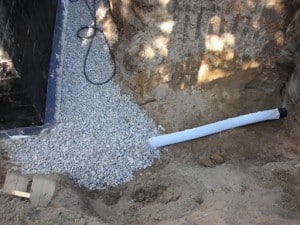
  • Install an external weeping tile system to lead any ground moisture away.


  • Manage your surrounding home and garden so that rainwater flows away.
installing exterior weeping tile in Toronto home

What Definitely Doesn’t Work

I’ve also seen a great many of the things that should work fail, especially when they’re performed by someone who doesn’t have alot of experience with foundation waterproofing.

The Best Advice of All

If you have a chronic leaky basement, and there doesn’t seem to be an obvious solution.  Have a waterproofing contractor come in and give an inspection.  A good waterproofing company will bring in the necessary tools to find the real source of the leak and can give you an accurate estimate of what it will take to repair the problem.  That doesn’t mean you have to do it, but you will know whether or not it’s a waste of time trying to stop the leak from the interior of your basement.