basement waterproofing

walkout basement under construction in TorontoIf you have a wet basement you’re not alone. Over sixty percent of homeowners in North America share your dilemma. And given Toronto’s age and climate, that number is probably higher.  Attempting to dry out a basement without fixing what’s causing it is like filling a bath with a badly-fitting drain plug. Problems come before solutions. Tackle root causes first.

No. 1 – First Principles

The water’s coming from someplace, but where exactly? The first clue is where damp is found. If the ceiling’s stained there’s a leaking pipe upstairs. If it’s on the upper walls say down to four foot from the top it’s surface water filtering down in rainy periods. If it’s lower down you may have a ground water problem.

Water working its way through walls and floors usually arrives through cracks and fissures. These may be through the material itself, around pipes penetrating it, or at the junction where walls and floor meet. It’s worth trying first aid by raking out loose dirt, maybe opening up a bit and caulking with an epoxy filler designed for underwater use.

No. 2 – Surface Water

Surface water comes from rainfall, and there’s no way to stop the rain from falling. King Canute couldn’t stop the tides and you aren’t able to do so either. The secret is to keep it away from the area above your basement outer wall, and this is how you go about it:

  •  After making sure your garden is below the level of the house damp-course, slope it away to a gradient of ½” per foot and pave an area at least three feet wide Make sure there’s someplace to accept the runoff or you may just have moved the problem.
  •   Next time it rains heavily go outside and see what happens to the roof water. You can’t look up through an umbrella so you need wet weather gear. Are the gutters coping with the rain? It the water gushing through the downpipes. Hopefully it’s not discharging directly on your paving!  Install prefabricated open surface drains as needed.

No. 3 – Openings to the Outside

In some areas, the law requires Canadian basements to have emergency escape routes independent of the house. These can be doors or reasonable-sized windows. Open them and inspect them carefully. Are the seals in good condition? Is there a point that shows up clean compared to the rest? If in the slightest doubt replace the seals and run a bead of silicone around the frames on the outside and the inside too.

No. 4 – Window Wells

It’s easy to overlook the possibility of an ineffective window well storm-water drain. This may have been inadequately installed, but it’s more likely to be a blockage. Clear it out. Remove the grill and flush it with a hosepipe until it discharges clear water freely. Make a habit of this every time you’re doing gardening.

Hopefully these measures will suffice and you can open up the doors and windows on a sunny day and allow your basement to dry out. If not, you have a more serious problem and you need a waterproofing specialist to advise you. This is no task for a jobbing handyman. You’ve already performed that task yourself. Ask a local specialist to take a look for you.

Explaining basement waterproofing to Toronto homeownerHow do you fix a leaky basement?  Believe it or not, you’ll get different answers depending on who you ask.  Ask someone who only water-poofs basements from the inside, and they will almost always give you the solution to waterproof the inside walls of your basement.  Ask someone who specializes in interior basement drainage solutions, and they will most likely sell you on an interior drainage system, even though that will never fix your water problems.

There’s a lot of hype around fixing leaky Toronto basements these days. It’s become fashionable to cloak this in technology the average Canadian homeowner will never understand. Here we’re going to distill this down to basics in the hope this helps you select the right bid from an honest contractor.

Fixing Leaking Buckets

Let’s say you have a leaky bucket and want to fix it. It’s a crazy example but bear with me please. All you have available is some window putty. Do you apply it on the outside? Of course not! You put it on the inside so the water pressure helps it stick.

Conversely if you wanted to stop water entering from the outside you’d put the putty on the outside too.  That way you could immerse the bucket in the swimming pool right up to the rim and the contents would stay dry all day.

You just learned how to waterproof a basement which is comparable to a bucket in a swimming pool. The earth outside is damp and the hydrostatic pressure can be quite immense. If there’s a crack it’s going to find a way through. And if you try to patch it with a blob of putty from the inside you know what to expect.

Water Management versus Water Proofing

Waterproofing a leaky basement from the outside is a messy, and sometimes expensive business. It involves excavation and special drainage systems and can disrupt the family’s leisure time for weeks. Most Toronto homeowners are ecstatic when a basement spin-doctor promises them a fast and cheaper solution. This will likely be one of these two ways out.

  • Paint Something On The Inside Wall – In theory all that’s needed is to chip out a few cracks, close them with epoxy and paint a cement-based product over. In practice a basement wall’s a living thing. As it flexes in response to outside temperatures and microscopic ground movements it undoes undoes the work in anything beyond very minor cracks and leaks.


  • Drain the Water Away as It Comes In – After blaming your basement for the failure (which is technically correct) you’ll be faced with the “only other alternative” which is akin to putting a pump in a leaky bucket instead of fixing the hole properly. In some cases, this may be your only solution for a wet basement, but many times it’s seen as a cheaper alternative to actually fixing the problem from the outside of the foundation. This involves:
  1.  Chipping a drain out in the concrete floor beneath the troubled wall. This needs to slope to a convenient point.
  2.  Digging a hole at the bottom end that acts as a sump to accumulate the water.
  3.  Putting an automated electric pump in the sump and finding somewhere to pump the water to.
  4.  Accepting the fact that you are admitting water contaminated with who knows what into your home.
  5. Concealing the entire installation behind a screen wall so you can pretend the problem’s gone away.

We call this “water management” and not proper waterproofing. What the some contractors and plumbers don’t tell you is that the water seeping through your basement wall is gradually degrading it – and that an astute home buyer will back off fast when they see what you have attempted. There’s only one way to fix a leaking bucket. The only way to fix a damp basement properly is to do so from the correct side too.

Have questions about your damp or leaky basement?  Feel free to contact us, we’re happy to answer any questions you may have.


Installing carpet in Toronto basementDo you have a damp basement but would still like to turn it into a usable part of your home?

Choosing the right basement floor finish is always a tricky choice. Concrete is by nature porous and no matter how hard your builder tried it’s always going to feel cold and clammy to the touch. Once you waterproof it as best you can your next step depends on the use you’re going to put it to and any remaining dampness issues in your basement. Here are some options to help guide you to the right decision.

  • If your basement’s just for storage and you don’t want to spend a fortune you can Paint or Stain the floor. Your main objective is to keep it clean so you can look for leaks. There are all sorts of colours and finishes available in paints and epoxies. Best of all you this is a project you’ll most likely be able to do yourself.
  •  Porcelain Tiles are impervious to water compared to ceramic tiles that have porous backings. They’re also temperature insulators and come in a great range of designer choices. On the downside the concrete base should be dry when you lay them which could pose an issue for a chronically damp basement, and they chip and crack when treated badly.
  •  Natural Stone is more expensive, but is less slippery when wet than porcelain. Unfortunately stone is if anything more porous than concrete. If you’re entranced by its natural beauty apply a below-surface chemical sealant at least once a year.
  •  Good old fashioned Linoleum Sheet has stood the test of time and keeps coming up shining with great new designs. Embossing makes it look like the real thing and it’s impervious to moisture too. It’s especially great if you have small kids around because it’s soft and won’t hurt tiny limbs.
  •  The only problem with linoleum sheets is that they’re well-nigh impossible to replace individually. Vinyl Tile sorts this problem out but introduces a few of its own. The adhesive must withstand underlying moisture and the concrete needs to be level to avoid distorting joints. That said, it’s easier to lay down.
  •  Laminate Flooring is inorganic and is available in moisture and mold-resistant versions. A range of stunning wood-effect designs compensates for higher costs and it’s incredibly hard wearing and easy to keep clean. It’s perhaps the perfect all-round choice.
  •  If your basement is dry and has a sub-floor then Carpet could be a desirable option because it has a homely feel. Choose an inorganic material that’s water resistant and comes in squares. Loose-lay them, so you can take them up if you need to do repairs below.
  •  Cork is right back in fashion again. It’s a renewable resource and is pleasant to work with too. Being bacteria-resistant is a further advantage. On the downside it scratches easily and is unsuited to heavy foot-traffic. Best buy an extra box to keep for spares.

Installing laminate flooring basement Toronto

So there you have it. As you can see, there are lots of flooring choices for your basement, depending on your expected use and the damp conditions present.  To turn your basement into a full and healthy living space, you should consider removing all sources of dampness to reduce the risk of basement mold.

Have a questions about damp basements and mold growth?  Feel free to contact us, we’re happy to answer any questions.


iron bacteria in toronto basement Is that orange sludge in my basement dangerous?
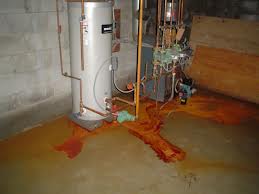
Did you ever dig down into a pool of water and find an orange sludge where ferrous iron was present? While it’s not dangerous as such, it does impart an unpleasant taste, appear oily and look like unprocessed sewage. We usually find this frequently in older Toronto basements, especially leaky basements.  Many homeowner insurance policies don’t cover this in the small print.

While Iron Bacteria (for this is what the orange sludge is) are not injurious to human health, they do stain water a rusty brown – and anything else they come in contact with like clothes and soft furnishings.

Iron Bacteria Facts

Iron bacteria are living micro-organisms that oxidise rusty iron that’s dissolved in water. They do this by attaching themselves to the iron object the water’s passing through. This could be a supply pipe or a sump pump. It could equally be a rusty piece of iron outside your basement in the backfill.

They are also prolific procreators of their species. In no time at all they’ll have babies attached on their backs. Within months the colony becomes a plaque-like biofilm. The inhabitants have found a place where they can live off rusty water, in the same we survive by breathing oxygen.

iron bacteria in richmond hill home

How the Problem Starts

While iron bacteria are naturally present in ferrous rocks (for example those containing manganese) chopping up a basement floor to install drainage introduces the oxygen they need to thrive on. All that’s needed is a piece of rusty iron left behind, or even exposed rebar cause by inadequate concrete pours.

Builders frequently exacerbate the problem by installing open drains inside basements to take bacteria-rich water away. Iron bacteria just love oxygen-rich environments like these. This adds power to the argument that the only way to stop water-penetration professionally, is outside basement walls.

Ways of Dealing with the Problem

If you have iron bacteria in your water-supply my advice is to stay away from chemicals that could be compounds of acids, disinfectants and biocides. These may well treat the symptoms, but they’re the last thing you want entering nearby streams and ponds. If you have a septic tank they’ll also kill it stone dead, which is a whole lot worse than something harmless, except that it looks like orange sludge.

It’s far more responsible to pump water that’s 140° hot through the system. This effectively pasteurizes the bacteria and kills them stone dead. You don’t need a high-pressure pump to do this. Your diesel-fired burner, 300 psi delivery and a handy bleed point are all you need.

Conclusion of the Matter

While iron bacteria isn’t necessarily dangerous to human health, it is an annoyance and can can effect the water quality in your home if left untreated.  If you see that orange sludge throughout your basement, it may be a sign that you have water problems and may need to call in a professional to find the source of your leaky basement.

Have questions about water or mold in your basement?  Contact us here, we’re happy to answer any questions.


While a well-waterproofed and well-drained basement is a great place to create quality relaxation space for families, the converse is unfortunately more often true. Many Toronto homes sit on top of basements that have become nothing more than a  home for mold and water. This obviously can have an adverse effect on your home’s market value as well as a decreased quality of home enjoyment for you.

Although waterproofing is an integral part of any wet basement solution, the key also lies in draining rainwater away before it filters down. Beware of thinking that all that’s needed is a roll of water-resistant membrane though. You have to control the flow of water down the roof and eaves, and through the gutters and downpipes too.  Water will flow and navigate to the path of least resistance, which often times is in and around your foundation.

clogged rain gutters in toronto

Beginning at the Top

When it comes to waterproofing you begin on the top of the roof where the surface water comes from. Few homeowners can imagine a thousand gallons an hour (close to four thousand litres) cascading down it in a heavy rainstorm.

To prevent this becoming ground water that converts to a wet basement, you have to have an adequate guttering system below your eaves to lead it far away from the foundations below. Hydrostatic power is a force that’s been known to crack waterproofing defenses – and even foundations if they’re poorly constructed.

Inspect your roof drainage system regularly and keep it clear of all obstructions. If you find water pooling within six feet of your house, then it’s vital you re-slope the ground to guide it away.

Getting Down to Business

Under normal circumstances rainwater saturates the upper ground layers and washes away into rivers or down streets. Unfortunately builders often scupper this by backfilling around basements with rubble. This acts like a gigantic sieve that allows hundreds of gallons to flow down to the bottom of the excavation, were it collects almost like a dam.

This sucks the earth on top into the airspace in the rubble, creating a natural hollow that attracts even more water. There is only one solution. You must re-gradient the garden near your house and install concrete drains to lead the water away safely. If you don’t, you’ll likely have a very hard time getting rid of your basement water issues.

installing exterior weeping tile in Toronto home

The Foundation of the Matter

These preliminary steps are a great start but hardly the end of the matter. No matter how hard you try there will always be ground water, and this is the hardest to crack because you can’t prevent it. Good builders install drainage systems at the level of basement foundations, cast concrete floors over membranes and securely waterproof the walls themselves.

Some don’t bother, or do a quick-fix job that will last a few years, long after the builder has been paid. Five, maybe ten years later the inevitable happens. The new owner goes downstairs to find their basement flooded and can’t figure out why this has suddenly happened.

Back to Basics

Most of these fixes aren’t cheap fixes. There’s only one way to fix a wet basement, and that’s by digging out the backfill and installing a decent footing drain. This collects the water as it filters down from above, and leads it away to a sump pump or daylight according to circumstances. After that, it’s a relatively simple matter of waterproofing the outside walls with membranes, and backfilling with less permeable material.