
basement waterproofing

Poor drainage can cause a myriad of problem with your home. These can include structural damage to the foundation, insect infestations and mould. All of these are expensive to correct, but often the causes of poor drainage can be remedied easily. Here are some common drainage problems that could be the culprit of your basement leaking:

1. Poor Grading on the Property

Perhaps the most common drainage problem is poor grading on the property. Water flows downhill and if your home is at the bottom of an incline, water will move to the lower elevation. If you have slopes, it is essential that the runoff is directed to a drainage system, such as a pipe or a ditch. Slopes must be strong enough to withstand excess water or soil will erode. You may even end up having landslides if the topsoil is lifted by the excess water.

Landscape grading torontoIn some cases, the contractor may follow the requirements laid out in the local code regarding the slope required on the lot, but the soil has high clay content. The clay content causes the soil to resist absorbing moisture, and low areas hold standing water more readily.

More commonly, the soil that is filled in around the foundation settles and becomes the perfect spot to collect water. This water seeps into the ground and enters the basement through cracks in the foundation wall. These recesses may be obscured by plants, bushes and raised planting beds.  These plants, and even the mulch around shrubs, can prevent water from draining away from your home’s foundation.

Grading problems are not always the result of a contractor. Many yards that were once properly graded develop problems. Trees and bushes may develop roots systems that redirect water by raising the adjacent earth. Sometimes landscaping projects change the slope of the property in certain areas and excess water ends up coming towards the building, instead of the direction it was originally intended to go.

2.  Clogged Pipes

Another common problem is that the outlet pipes for foundation drains are clogged by debris. Water cannot pass through the pipe, so it pools near the foundation instead. Alternatively, some homes were never equipped with the proper size of pipe when they were built. If there is a heavy storm, the rainwater backs up as the pipe is too small to handle the volume of water.

3. How Rain Water is Being Directed in Your Yardbroken run off extension for gutter in Scarborogh home

Lastly, water accumulating around your foundation can be a direct result of how you are directing rainwater in your yard. Design your landscape so that water ends up in the street drain through a pipe, and is not allowed to flow across your yard undirected. You can also install grass swales to direct water away from your home. A swale is a shallow grassed ditch that collects storm water and then directs it away from the house.


Regardless of what the reason is for water collecting around your home, it is critical that you get it attended to quickly. Water problems can escalate from minor to major and the expense goes up proportionally.

If you have water issues in your home, Nusite Waterproofing can give you professional advice and help when you need it.
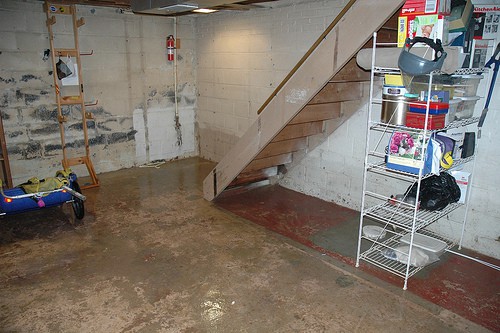


You’ve got water coming into your basement and you’re wondering what to do. What could be causing this and how should I handle it? Let’s look at the common causes and the steps you need to take to solve the problem.Basement Flooding

Most homes have one connection to the sewer system. Sewer water levels in this pipe are normally below the level of your basement floor. However, sometimes water levels in the sewers rise above this level due to physical changes. Gravity will push this extra water in the sewage pipe down, and out of the drain.

Reasons for Backups

Blockage – The most common reason for a basement drain back up is that there is something in the pipe. This can be household refuse or blockage due to something like tree roots that have grown into the line.

Sewers are full – Sewage pipes can only hold so much. If there have been heavy rains, the excess water in the sewer system overloads it.

Sump pump failure – Your sump pump may not be able to cope with the amount of water trying to come into the house, or it may fail from a power outage or faulty equipment.

Seepage Water tables rise and fall all the time. When water levels are high, water can force itself through cracks and holes in the foundation. This is particularly true in older homes, however even newer foundations are susceptible if there are faults in the concrete. This will likely happen during heavy rains, ground-thaw or snow-melt periods. Land also settles over time, so water pools near the home, or downspouts from eavestroughs release water too close to the building.

Weeping tile failurethe weeping tiles around older buildings often deteriorate. This can include a partly, or fully, collapsed pipe or sediment plugging the pipes. As weeping tiles are designed to move water away from the structure, failed pipes can result in both groundwater and wastewater entering the basement through the floor drain.

What to Do

When you see what coming in the basement, clearly you want to know how it is getting there. Here are the things you should consider and do first:

  1. Stop using the water system – don’t use toilets and sinks unless it is absolutely necessary.
  2. How high is the water? – Is water is touching anything electrical, such as an electrical outlet, extension cord or baseboard heater? Stop right there and do not enter. Call a qualified electrician or your hydro service and have the electricity shut off. If the water level is low, wear rubber boots and step on dry areas. Do not touch anything electrical.
  3. Is the water near gas-fired equipment? If water is encroaching on your furnace, hot water heater or a gas stove, call your local gas service immediately.
  4. Has this happened before? If water keeps appearing in puddles in your basement, it is seeping in from the outside of your home. The water is forcing its way inside through holes and cracks in your home’s foundation. Contact a basement waterproofing and foundation repair professional. NuSite Waterproofing can help you solve this problem for a reasonable fee.
  5. How extreme is the flooding? Has the water stopped coming in, or is it still filling the basement? If the water is pooling, it is either seepage or backed up wastewater from your own home. If it is still rushing in, this suggests a more serious problem.
  6. Domestic wastewater – Your sewage line may be plugged by something that has been flushed down the toilet or accumulated food scraps stuck in the pipe. You can try chemical products to open the drain, but you will likely need to use a “snake” to unplug it. A snake is a spiral cable that is inserted into the pipe and twisted to rub against the interior to dislodge the obstruction. The pip may also be obstructed by roots invading the basement drain line. In this case, you will need to either rent a power snake with sharp cutting blades, or hire a service to come in do it for you.
  7. Extreme flooding – If water is pouring into your basement, you need to act quickly. Call a plumbing contractor. Whether the flooding is due to something caused by the public water service, or something on your own property, you need to get the water stopped now. Most municipalities will reimburse you for the cost of the plumber if it was due to their failed system. Next, call your city water and sewage department for assistance. They may be able to shut off water to the area. New homes are equipped with valves that do this automatically. Locate the building sewer clean-out caps for your home and make sure that they are accessible. Do not attempt to open the clean-out.
  8. Standing water – if it is safe to enter the area, mop up the water and disinfect it by adding small amounts of chlorine bleach. If water has gone beyond the concrete floor, these areas are susceptible to mold. Contact a professional flood damage restoration company.
  9. Insurance – if the flooding is extensive, take photographs of the damage and contact your insurance broker.

Clearly, flooding can be frustrating or devastating but it cannot be ignored. If you are fortunate enough to have a situation that can be remedied, attend to it now to avoid further problems down the line. Waterproofing and basement repairs are affordable and can save you thousands down the road.

Have questions about your basement drain or similar basement water problem?  If you live in Toronto or the surrounding GTA, feel free to contact us here for a free in-home inspection and estimate.

Sump pumps can often be found in basements where flooding is prone to happen. In short, the purpose of sump pumps is to help control wetness from accumulating when a water table is above the foundation of a home. Sump pumps remove water that has accumulated in water collecting sump basin and send it away from the home to places like municipal storm drains.

Backup Options

Traditional battery powered vs whole home backup Sump pump installation in Toronto basement

There’s no arguing that sump pumps are useful tools; but unfortunately, since they are connected to your home’s power grid they are not 100% reliable without a backup solution. If the power should happen to go out and your primary sump pump fails, having a backup sump pump installed will ensure that your home doesn’t get flooded. Choose between a Traditional Battery Powered sump pump and Whole Home Backup system.

Let’s take a closer look at the two backup options:

Traditional Battery Powered

The most typical type of backup for a sump pump is battery powered. If your home loses power during a strong storm, a battery-powered backup sump pump will keep working to protect your basement.

Pros:

  • Designed to switch on automatically when the main power is off, continuing to pump out water when the main sump pump is off
  • Eliminates the headaches and cost associated with a flooded basement
  • Inexpensive
  • Easy to install

Cons:

  • Short-term solution, lasting for approximately 7-24 hours before battery needs to recharge
  • Batteries need to be replaced periodically for the pump to work effectively
  • Requires regular maintenance, which creates additional costs for the home owner

Whole Home Backup

Another option is to backup your entire home in case of a power outage. A home backup generator senses a power outage, and automatically delivers backup power to your home’s electrical circuit breaker box until utility power returns. After utility power returns, the generator shuts itself off until the next outage. It sits outside (just like your air conditioning unit) and operates on natural gas or liquid propane gas.

Pros:

  • Long-term solution for extended power outage; generator power can last for up to two weeks
  • Protects your whole home in a power outage, not just the basement

Cons:

  • More expensive than a battery powered sump pump backup*
  • Generators require periodic oil and filter changes to ensure maximum performance
  • May be noisy

*What many people don’t know is that insurance can cover part of the cost of a sump-pump back up system. Be sure to check with your insurance provided on what is covered.

Remember to Test and Maintain Regularly

If your basement is prone to flooding, it is essential to invest in a sump pump with a back-up solution.

Regardless if you choose to go with a battery powered backup system or a whole home system, it’s important to test and maintain your sump pump regularly to make sure it will operate when the next big rain storm occurs. You can test your system by pouring a bucket of water into the sump pit. You’re looking for the pump to turn on, remove the water from the pit and shut itself off.

We service hundreds of homes in Toronto every year and most homeowners aren’t sure what kind of water pump they have installed in their basement.  Here’s a little breakdown of the difference between a sump pump and an injector pump and how each is used.

Despite looking very similar and performing the same basic functions, a sump pump and an injector pump perform the same action very differently. Homeowners are often confused by what the difference is, and why you need one or the other. Sump pumps have been used in homes for a long time, but the injector pump still leaves people perplexed. Here, we will demystify these integral parts of a home water management system.

What is a Sump Pump?

Sump pump installation in Toronto basementA sump pump is a water pump located in the basement. It is small and submersible, and it sits in a sump basin, which is set into the ground. The sump basin connects to a drain tile system, where water collected by the drainage system will flow to the sump basin. Groundwater is often collected into the basin, and helps to keep your basement dry. If the pump malfunctions or there is a sudden large rush of water, the basement will flood, but there are battery-operated back-up systems often available and used in conjunction to ensure dry conditions.

The sump basin holds the accumulating water until it rises to a certain height, high enough to activate the float switch on the sump pump. It will then pump the water out of the basin onto the lawn through strategic piping. It often arrives at a storm sewer, dry well, or other dispersal devices.

What is an Injector Pump?

Ejector pump installed in Toronto basementBecause the two look nearly identical and perform the same tasks, people often confuse sump pumps and injector pumps, and wonder why an injector pump would even be necessary. Like the former, it is installed in a basin which is set into the ground. However, it does not utilize the drain tile systems to collect groundwater. Instead, it collects water from floor drains, such as excess water from a washing machine, sink, or even waste water from a bathroom, depending on the home and the quality of its systems.
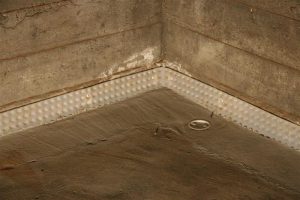
Because an injector pump is used to handle this type of water, it has a sealed lid on the basin, and a vent pipe to discharge gases. If the injector pump will not come into contact with waste water, it will look the same minus the vent. An injector pumps is connected to a sanitary sewage line through a discharge pipe, very much like a home’s plumbing systems.

If an injector pump malfunctions, it will flood, but not nearly as heavily as if a sump pump fails. However, because this is tainted sewage water, it could create a health hazard if exposed to the dirty water and it must be cleaned up after properly.

If you would like to locate where the injector pump is located in your home, simply turn on the tap or flush your lower-level toilets. It should activate the pump.

Injector pumps are also often installed by plumbers, while sump pumps are often installed by basement waterproofing professionals, who offer a variety of long-lasting pumps and who are knowledgeable in basement water removal.

If you live in Toronto or the surrounding GTA and are interested in a sump pump for your basement, feel free to contact us here.  We offer a free in-home inspection and estimate for all sump pump installations and repairs.

Interior weeping tile system in Toronto basementAs a homeowner braving yet another Toronto winter, you may be tempted to leave your basement waterproofing to the spring. After all, it snows a ton in Toronto during the winter and the ground will be frozen for much of it – you can do it later, right?

Wrong. Putting off waterproofing can be a short-sighted mistake that can permanently damage the foundation of your home. Unfortunately, Toronto has the ideal conditions for water leaks: wet weather, aging home foundations, and even during the winter, we experience sudden bouts of snow melts and above-freezing temperatures that can come without a warning. Without a protected basement, all that water could end up leaking through your home’s foundations and cause a big headache upon discovery in the spring.

Canadian winters tend to have a freeze/thaw cycle, causing your house and the ground around your foundation to expand and contract at different magnitudes and rates, potentially making existing cracks larger and opening up joints where water flows through. Also, with the freezing weather comes ice jams in your pipes, troughs, downspouts, and on your roof. When your water drainage systems are clogged up, the water will have to find a different path. Typically, it flows to the ground directly beside your foundation, which is the most common place for foundation leaks.

When spring comes, temperatures will warm up and thaw the ground around your home, contracting and leaving a gap between the ground and your home, allowing water to freely flow through. Groundwater will leak into a weak home foundation if not properly sealed. And even though the weather will be warmer, there will still be rain, and can take you by surprise by flooding your basement.

Almost any repairs that can be done year-round can also be completed during the winter: non-structural cracks can be filled, weeping tile drains can be installed, pump systems can be mounted or replaced, and crawl spaces can be compressed. These are just some samples of the types on interior waterproofing you can have done over the course of the winter. External maintenance can also be performed if needed, but as digging is easier during the spring and summer months, you may want to consider leaving that for next season.

Basement waterproofing companies can also provide you with faster repairs and immediate service during the winter season, as they tend to be less busy during this season than during the rest of the year. If you wait until the weather heats up, you may be stuck with a leaky or flooded basement and have to do damage control yourself for days or weeks until they will be able to get to fixing your home, as they are very high in demand then. Now is a great time to have your basement waterproofing done so that you can beat the crowds and not have to worry about a soaked basement come spring.

Don’t let spring surprise you with a leaky basement and home foundation damages. Give yourself a peace of mind by taking advantage of the winter season and sealing your basement now.

If you live in Toronto or the surrounding GTA, we can provide a free in-home inspection and estimate for any of your interior or exterior waterproofing needs.  You can contact us here to get started.