
basement waterproofing

Spring thaw in TorontoMost people welcome the spring with open arms following a long, hard Toronto winter, but they need to be wary of the damage a spring thaw can cause.

Once the snow and ice begins to melt it can result in a flooded basement if you don’t take the proper precautions.

The following tips are designed to help keep your basement dry during the spring thaw.

1-Clean the rain gutters
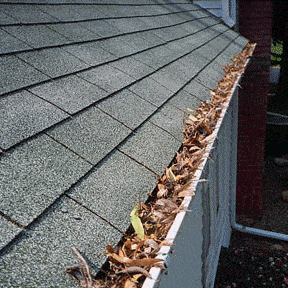
It’s a good idea to clean your rain gutters at least twice a year. This is especially important after the leaves have fallen from the trees in the autumn. Check to make sure the gutters are free of debris, don’t overflow, and aren’t leaking. All of the gutter connections should be watertight and the system should divert rainfall and melting snow/ice away from your home. One of the best ways to keep debris and leaves out of the gutters is to install guards.

2-Extend the downspouts
The downspouts need to be aimed between 10 and 20 feet past your home’s foundation. If possible, it’s a good idea to direct them towards sloping land so the water can flow away from your basement. Try not to bury downspout extensions or to connect them to a drywell. You’ll find that drywells can retain a specific amount of water before they start to back up. If this happens the gutters could split and the water will end up close to your home. If you decide to run the extension pipes below the ground be sure to check them regularly so you know they’re properly draining.

3-Landscaping
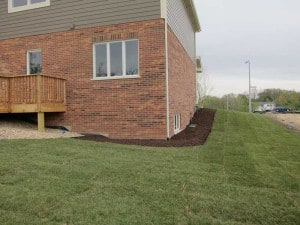
If your property slopes towards your home the surface water will naturally run in that direction. If this is the case you may want to do some landscaping to direct the water away from the home. A good landscaper should be able to help you out with this. In addition, don’t pile snow close to your home during the winter. You don’t want it melting near the foundation when it melts.

4-Use a dehumidifier
A humidifier is designed to control the level of humidity in your basement and it should help stop excessive moisture from creating any problems such as musty odours, sweating pipes, mold, and rusting. If your dehumidifier has a deicer and a built-in drain hose the deicer will prevent the unit from freezing and the drain hose will empty it. You should also keep your basement windows and doors closed all year round since humidity can creep in the room if they’re left open. Warm, humid air will cause condensation if it comes in contact with cooler floors and walls and that could lead to moisture-related problems.

5-Check your pipes
Make sure that your home’s plumbing system is in good working order since they could freeze and burst during cold temperatures. You also want to be sure there are no leaks in the system since they can result in water damage. It’s a good idea to have a waterproofing professional inspect your basement to make sure that it’s waterproofed as good as possible. Ann inspector will be able to make sure that large amounts of water won’t be able to find its way into your basement.

If you live in Toronto or the surrounding GTA and have a leaky basement problem, contact Nusite Waterproofing today for a free in-home inspection and estimate.
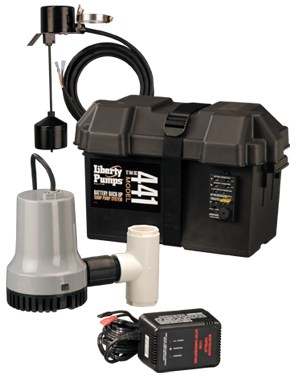
liberty-sump-pump-441The best way to get rid of any excess groundwater or rainwater from your home, office or any other property or area is to use a sump pump. This type of pump sits inside of a basin, which is also referred to as a sump and it’s designed to collect excess water that collects in your basement.
Of course, if you’re ever unfortunate enough to have a flooded basement you’ll need to pump the water out as soon as possible to limit the amount of damage done to your property and/or its contents. Since the pump’s sump basin can overflow if it’s not being pumped out constantly it’s essential to have a backup system in place if the main power should happen to go out or the primary pump fails.

If the pump does fail then a battery-powered backup pump will take over automatically, allowing you to remove the water from a flooded basement as quickly as you can.

If you’re searching for a an emergency sump pump system with a battery backup then you may want to check out the Liberty 441 model.

The Liberty Model 441 backup sump pump is designed to be used in combination with a primary 120-volt sump pump, operates via a 12-volt DC battery, and can adapt to a 1 and 1/2 or a 1 and 1/4 discharge. If the power goes out due to water damage, a severe storm or any other reason, you’ll be able to use this pump because it’s powered by a recommended Type M27 marine-grade deep-cycle battery. The 12-volt high-output pump comes with an advanced five-stage charging system plumbing connections, a battery box and strap, and a terminal block that’s simple to connect, but the battery needs to be obtained separately.

liberty-sump-pump-diagram

The Liberty 411 backup submersible sump pump also comes with a 12-volt charger, control panel, an automatic mercury-free switch, tee, check valve and bushings for 1 and ¼ and 1 and ½ connections, and audible light and alarm, and an automatic startup system.

The advanced five-stage charging system will test the battery while maintaining the maximum charge without running it down. The state-of-the art charging algorithm is designed to continuously test the unit’s charging process from the start to finish.

The specifications for the charger are INPUT: 120Vac, 0.19Aac, 60Hz and OUTPUT: 12Vdc, 900mA

Five Charging Stages:

1-This is known as the pre-qualification test and it utilizes a flashing yellow LED light. This stage actually consists of three different tests to the battery. If a fault is discovered in the system then any further charging will be prohibited. The length of this stage depends on the condition of the battery and it typically takes anywhere from 40 seconds up to two hours.

2-The second stage is known as the constant-current charge and it sees the yellow LED light stay on continuously when the battery is being charged at the full output.

3-The yellow LED light stays on in this stage, which is the constant-voltage charge. However, once the light goes out it means the battery has been fully charged.

4-The fourth stage is known as the float charge and a green LED light will come on. The charger will maintain the battery charge while you connect A.C. power. The power can be left connected for an indefinite period of time and only the service life of the battery can limit it.

5- The fifth and last stage is known as the recycle charge. During this stage a new charging cycle will begin every 84 days as long as the battery is connected to the charger.

liberty-sump-pump-performance

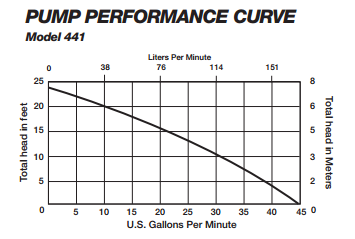
The system features a 150-hour safety timer. A fault will be displayed if the system times out and the charging process will be halted to protect the equipment. There’s also a short circuit and reverse-battery protection system and if there’s an emergency you’ll see an alarm light and be notified audibly as well. The unit’s slip-on connectors and terminal block make for easy wiring and the float switch is fully assembled. If the pump is operated continuously the battery will hold a charge for up to four hours and if the pump head’s used intermittently the battery can last up to 30 hours.

Have a question about backup power for your sump pump?  Contact Nusite today, we offer free in-home inspections and estimates in Toronto and across the GTA.

Does your basement smell bad and you don’t even like to go down there because of it? Has that musty smell got you worried there is a bigger problem causing the smell and you don’t want to face it? We’re not surprised, as that smell usually means there’s moisture down there.

Luckily, there are times that you can correct problems yourself to remedy moisture issues. Other times, you will require special equipment and advanced knowledge to get the problem under control. Let’s start with some of the basic things you can do to manage water problems in the basement of your home.

basement leak in Etobicoke home

Manage Your Water

Your home is equipped with gutters and downspouts, but that doesn’t mean that they are configured properly. Take the time to test how water flows off your roof. Do you have areas where water spills out of the gutters and onto the area around your house? Does the water from the downspouts flow away from your home? Sometimes it is a simple as doing a gutter repair, cleaning your gutters or adding an extra length of downspout piping to move the water away from the foundation.

Also check if water pools around your home during heavy rainfalls or when snow melts quickly. Often times the grade on your property will change with time. You might plant trees and shrubs, lay sidewalks and patios and disturb the natural flow of water on your property. In this case, your property may need to be regarded or additional weeping tiles may need to be installed to handle the water.

Check for Cracks

If you have an unfinished basement you may be able to see where the water is coming in. If you spot a puddle on the floor or you can see water seeping in through a crack, you may be able to patch it with a commercial product. It is important to keep in mind that these products are meant to be used on minor cracks only. If there is a major fault in the foundation the pressure of the water entering your home will force any paint-on product away from the foundation with ease. Water is a powerful force and it always moves to where there is the least pressure.

Check that hard surfaces outside your home are sloped away from the basement too. Patios, driveways and walkways may need to be re-poured if water is flowing towards your home.

If you have a finished basement, things are not so easy. You might not be able to tell where or how the moisture is getting into your basement. You cannot judge the seriousness of the problem, but one thing is for sure – you have a problem. Moisture trapped behind building materials encourages the growth of mold and mildew which can not only cost you thousands in repairs – it is also dangerous to your health. Waterproofing specialists have equipment designed to locate leaks so they can judge the extent of the problem.

finished and dry basement in Toronto

Below-Ground Compensation

Most homes have one operating system for heat and in hot climates they also have one for cooling. The problem is that your basement is naturally cooler and damper than the higher levels of your home.

Musty smells may occur when the relative humidity in your basement is too high. Consultation with a good heating/air conditioning company may provide a solution. A dehumidifier in your basement or two zones for your air conditioning system could rectify the problem. There may also be less air flow in the basement and more ventilation may need to be installed to reduce condensation.

Major or Minor?

Condensation or minor leaks may be fixable, but if you have a lot of water in your basement you may need expert help. Trained professionals know what to look for and can offer the quickest and most affordable solution. Nusite Group offers a free inspection and estimate. Ignoring that musty smell in your basement could cost you a bundle in the future. Why risk it?

Have a question about water in your basement?  If you live in Toronto or the surrounding GTA, contact Nusite Group today for a free in-home inspection and estimate.

Sump Pump InstallationYou’re a conscientious homeowner and you’ve installed a sump pump to avoid any more flooding in your basement. It rains cats and dogs outside and suddenly your basement floods again. What’s going on? Your sump pump isn’t working. Arrhhh!

Unfortunately, this is an all too common scenario. Just because you installed a sump pump there’s no guarantee that it is always going to work. It is mechanical and subject to problems just like any other machine. There are better pumps and ones that don’t work well at all, but none of them are perfect. Here are some of the most common failings of any sump pump and some things to consider too.

No Power

This is the number one reason your pump may not work. The power goes out and the pump stops pumping because there is no electricity. The problem is that electrical failures often happen when we are asleep or out of the house. A good precaution is a battery-driven backup pump that kicks in when the power goes kaput.

Float Switch

There are two main types of floats – vertical and tethered. Either can stick, but tethered are more prone to do so as they stick to the walls of the sump pit. Some sump pumps have mechanical pressure switches that fail too.

Clogged Intake

If the intake plugs up with debris the pump cannot extract water from the sump pit or sump liner. The pump is busy trying to pump and straining the machine. Make sure screens are clear and nothing is lodged in the intake.

Underpowered Pump

There are a variety of pumps on the market with different capabilities. It is important that you have one that can handle high volumes of water during severe storms. You will need at least 1/3 horsepower to pump 35 gallons of water per minute in normal conditions. If your house sits on a higher water table or if you can hear your sump pump running often, upgrade to a half horsepower pump which pumps around 60 gallons per minute to be on the safe side.

Frozen Discharge Line

For those of us that live in a cold climate, this is a very common occurrence. If the discharge pipe is not tilted enough, water will sit in the pipe and freeze when temperatures turn cold. This blocks the way for water to discharge and any water the pump collects has nowhere to go but back towards to the sump pit, which eventually spills out and into your basement.

Burn Out

A cheap pump or an underpowered pump will burn out quickly. Inexpensivematerials and components are more prone to failure, particularly when you need them to work the most. Sump pumps that are always doing their best but there is just too much water will fail too.

Tired Equipment

Sump pumps are mechanical and even with the best maintenance they will only last between five and seven years. Just because your pump hasn’t failed doesn’t mean that it won’t. Be pro-active, watch for deals and swap out your old pump for a new one before disaster strikes.

Have questions about your current sump pump or installing one in your basement?  If you live in Toronto or the surrounding GTA, we provide free in-home inspections and estimates and can show you how you can get your sump pump for free, including installation.

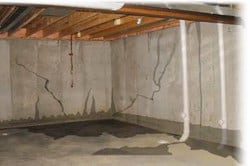
Water collecting in the basement of your home is a sign that you need to take action. This past Winter in Toronto has been particularly harsh, leaving many basements with foundation cracks and water leaks after the Spring thaw.  While an occasional puddle, water trickling out of a small crack in the wall or visible dampness on the wall or floor may seem innocent enough, they are all signs that there is a problem.

Ignoring a water issue in the basement of your home can lead to the growth of mold, a proven health risk.

Water seepage into the basement of your home has many causes and it is important that you determine the cause to choose the proper course of action. Here are some of the most common scenarios for water seepage in your home’s basement and some possible solutions:

Heavy Rainfall

Water often forces its way into the basement after a heavy rainfall or a quick change in temperature that melts snow. Water always follows the path of least resistance, so when the ground becomes saturated it pushes its way into your dry basement. Water has a lot of pressure behind it so it will press through weak areas in the foundation to relieve the pressure.

If there is only a very small amount of water, you may be able to solve the problem with an oil-based masonry waterproofing paint, though this is more of a band-aid rather than a fix.  Naturally, you need to find where the water is coming in.

Serious seepage into the basement requires an interior system waterproofing system to relieve the pressure and pump excess water away from your home. This does require expertise as there are countless systems and the system must match your unique situation. The power of the pump and its capacity is important.

Getting your home ready for rainy Fall season Toronto


Downspouts

Improper positioning of downspouts happens more often than you may think. Take a look at yours and make sure that they are discharging well away from your home. Sometimes all you need is to adjust the slope on the piping and to extend the length so that the pipe reaches beyond the boundaries of your home.

clogged rain gutters in toronto

Grading

When your home was first built a large hole was dug to build the foundation. After construction, the contractor packed soil around the foundation again, but this soil is never as hard as the untouched soil beyond it. When water is looking for a place to go when it rains or snow melts, it will run towards the softer, more porous soil around your home. Normally, “weeping tiles” around your home help to disperse this water but they can deteriorate over time. As well, changes to the landscaping such as planting trees, shrubs or structures can change the path of water on your property and direct it towards your home.

Do-it-yourself types may want to hire a bobcat and excavate around their home to install weeping tiles, but check with local authorities before you dig. Electrical wires and water pipes lurk beneath the surface and you certainly don’t want to make a big job even bigger. Another consideration is that weeping tiles may not be enough and you may require a waterproofing contractor instead. If the foundation is compromised, tiles will not be enough. The only solution may be a professionally installed waterproof membrane around the foundation of your house.

Landscape grading toronto

Window Well

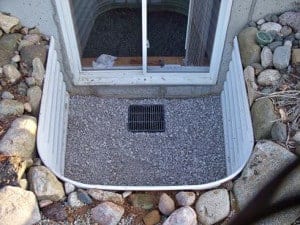
Water pooling around a window well is a sure sign of a drain clog, possibly with debris. Normally this just involves cleaning the sludge off the drain cover, but sometimes silt and other fine debris works its way beyond the cover. If cleaning the cover does not clear the clog, a plumber’s “snake” is necessary.

window-well-dry-well-toronto-home

If you are having difficulty determining how moisture is getting into your home or you feel that the work is beyond your capabilities to fix, give NuSite a call. We offer a free inspection and estimate in the Greater Toronto area. We have the experience and the equipment to get the job done right so you don’t have to worry.